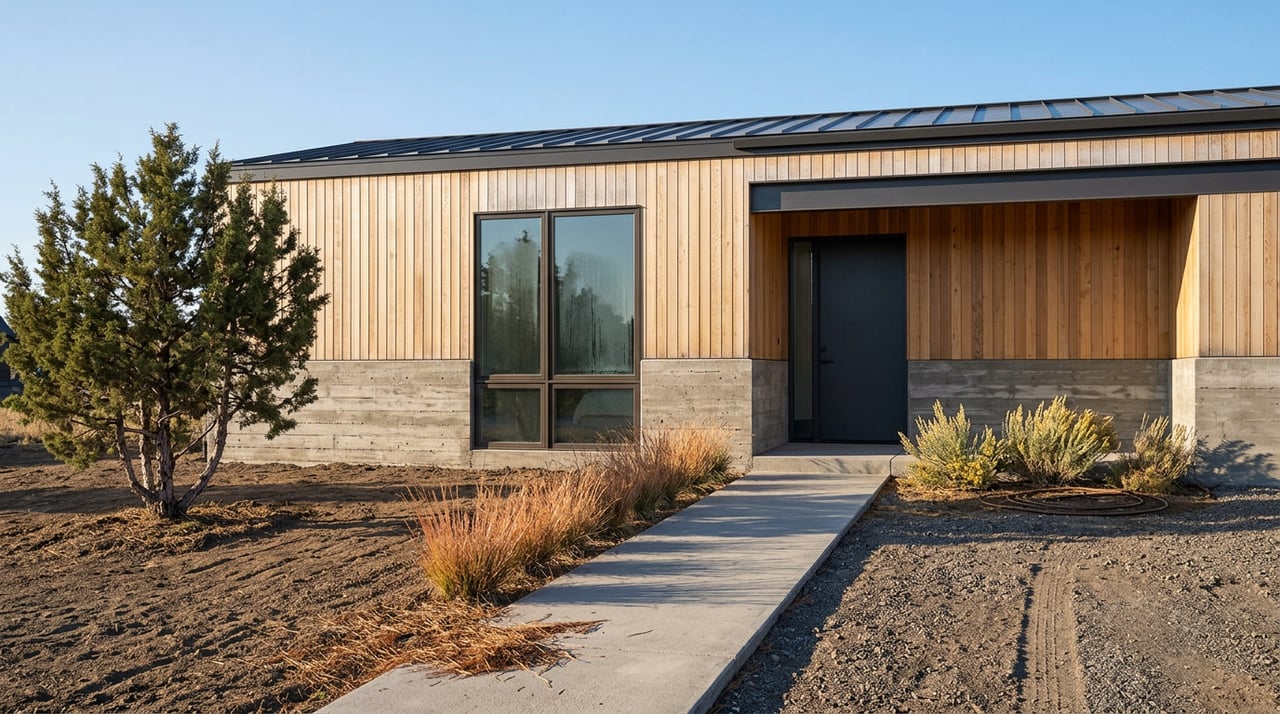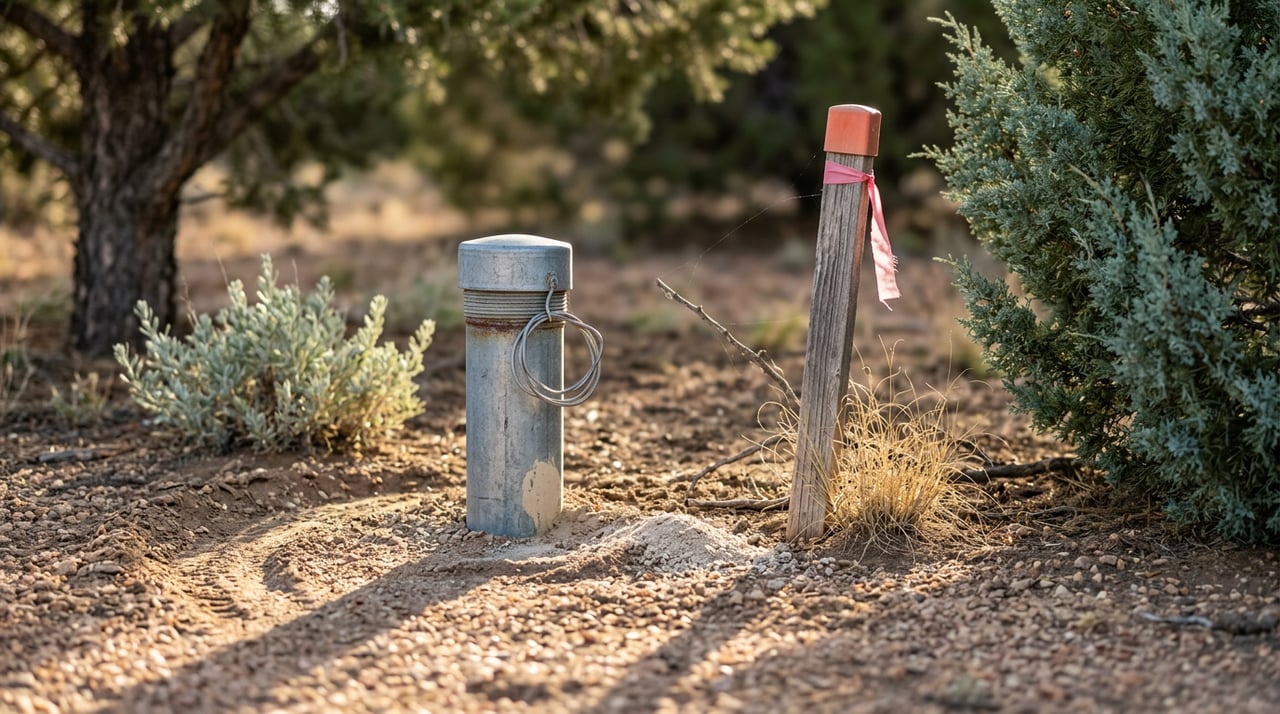
Picture two five-acre listings in Cotopaxi, both facing the Sangre de Cristo Mountains, both roughly the same drive from the Cotopaxi Store. One is priced at $8,000 an acre. The other is priced at $17,000 an acre. Most buyers scrolling a land search would circle the cheaper one without a second thought. That instinct is exactly backward for a meaningful share of Cotopaxi land right now, and the reason has nothing to do with the view.
Cotopaxi's land market is small enough that its own average is misleading. Understanding why changes which parcel is actually the better buy.
What "per acre" means right now, and what it hides
As of a June 2026 MLS snapshot, roughly 206 land parcels were listed for sale near Cotopaxi, spread across about 4,051 acres, at an average listing price of $365,486, or about $17,322 per acre. That number gets quoted constantly. It is also almost never what a typical buyer pays.
Separate market tracking puts the median price per acre in Cotopaxi at $8,000, with a typical parcel selling around $40,000 total, most commonly for a lot near 5 acres. Recent sales ranged from $15,000 on the low end to $150,000 for premium lots. The gap between that $17,322 average and the $8,000 median is not noise. It is the fingerprint of a market where a handful of large, improved, or amenity-heavy properties pull the mean far above what a typical buyer actually spends.
You can see the source of that pull just by scanning current listings. Cotopaxi's inventory includes properties like a 192-acre spread with a working lavender operation and a historic log lodge, a 27-acre estate built in 2023 with architectural finishes, and a 525-acre mountain retreat with creek frontage. Those are real listings, and they belong in the same market as a bare 2.5-acre lot with power at the road. Averaging them together produces a number that describes neither one well.
What the softening market adds to the picture
Cotopaxi's land prices were down 57.6% year over year as of that same tracking period, with roughly 14.0 months of supply on the market, a level generally associated with a buyer's market. The 3-month absorption rate sat at 7.2%, and the median time on market ran about 78 days, with a typical full sale cycle closer to 152 days.
| Measure | Figure |
|---|---|
| Average listing price | $365,486 |
| Average price per acre | $17,322 |
| Median price per acre | $8,000 |
| Typical parcel sale price | $40,000 |
| Months of supply | 14.0 |
| Year-over-year price change | -57.6% |
| Median days on market | 78 |
Falling prices and a long supply pipeline usually favor buyers on negotiating room. They do not touch the cost of the two things that actually turn raw dirt into a place you can live: a well and a septic system. Those costs are set by geology and county process, not by how soft the land market feels.
The bill that never shows up in the listing photo
A complete private well system in Colorado typically runs $10,000 to $50,000, with the statewide average landing around $10,500 for a system at the typical 250-foot depth, at drilling rates of roughly $28 to $65 per foot. Depth is the biggest lever, and nobody knows the exact depth until the drill finds water, so a 15 to 25 percent contingency above any estimate is a reasonable habit rather than pessimism. Mountain and hard-rock geology, which describes a fair amount of the terrain around Cotopaxi's canyons and foothills, tends to sit toward the higher end of that range rather than the lower one.
Septic is its own line item. Colorado systems commonly run $10,000 to $40,000 or more depending on soil percolation, slope, and whether an engineered design is required, with basic gravity-fed systems on good soil at the low end and mound or advanced treatment systems on difficult soil pushing well past $30,000. For a point of comparison, one contractor's county-by-county estimate puts nearby Chaffee County, home to Salida and Buena Vista, at $15,000 to $35,000 for a typical install, driven by the same mountainous terrain and variable soil that shows up across this stretch of the Arkansas Valley.
Add a mid-range well and a mid-range septic system to a bare parcel and you are commonly looking at $25,000 to $70,000 before the first stick of framing goes up. On an $8,000-per-acre, 5-acre lot, that infrastructure cost can equal or exceed the price of the land itself.
Why the "expensive" parcel can be the cheaper one
This is where the per-acre number stops telling the whole story. A handful of current Cotopaxi listings already include a domestic well, a permitted septic system, and a building pad. One 38-acre listing currently on the market advertises exactly that combination, a well rated at 60 gallons per minute, an installed septic system, and a building pad already cut. That property will carry a higher price per acre than a bare parcel down the road. It may still be the better deal, because the buyer of the bare parcel is signing up to spend the well and septic money anyway, on top of the land price, with several months of permitting sitting between the purchase and move-in day.
Run the math side by side. An $8,000-per-acre bare 5-acre parcel costs about $40,000 for land, then adds $25,000 to $70,000 for well and septic, for an all-in range of roughly $65,000 to $110,000 before any home construction. A comparable 5-acre parcel already carrying a well and septic at $17,000 per acre costs $85,000 for the land and needs no further infrastructure spend. Depending on where the bare parcel's actual well depth and soil conditions land, the "more expensive" property can come out even, or ahead.
The permitting sequence that sets your timeline
Fremont County, which governs Cotopaxi as an unincorporated area, requires a permit from its Public Health Agency before any on-site wastewater system goes in the ground, and that process starts with a site evaluation to confirm soil suitability. The Fremont County Building Department handles the building side, and the county's own septic system guidance is worth reading before an offer, not after.
On the water side, Colorado is the strictest prior appropriation state in the country, meaning every drop of groundwater is already legally spoken for in some fashion, and a well permit through the state Division of Water Resources can take up to 49 working days to review before drilling even starts. Add pump installation, electrical hookup, and water testing, and the realistic window from application to usable water is 2 to 4 months.
For a buyer comparing Cotopaxi against Chaffee County land near Salida or Buena Vista, the jurisdiction matters as much as the price. Different county health and building departments mean different intake forms, different review timelines, and different local staff to call with questions. A parcel that looks identical on a map can move through a completely different process depending on which side of the county line it sits on.
What this means before you write an offer
The instinct to chase the lowest price per acre makes sense on a spreadsheet. In a market this small, with a median this far below the average, it can lead a buyer straight past the parcel that actually costs less once the well is drilled and the septic is in. Before comparing two Cotopaxi listings on price per acre alone, it is worth asking a well driller what depth and geology to expect on that specific parcel, and asking the county what the soil evaluation is likely to show. The Cotopaxi General Store, open since the 1920s and still the town's hub along Highway 50, has outlasted plenty of market cycles. The land underneath a lot of these parcels has not been tested the same way.
FAQ
Is Cotopaxi in the same county as Salida and Buena Vista? No. Cotopaxi is in Fremont County, while Salida and Buena Vista sit in Chaffee County. That means separate building departments, separate health departments, and separate permitting timelines for anyone comparing land across the two.
How long does it actually take to get a well permitted and drilled in Colorado? Permit review through the state Division of Water Resources can take up to 49 working days, and the drilling itself usually takes only 1 to 3 days. The full process, including pump installation and water testing, commonly runs 2 to 4 months from first application to usable water.
Does a lower price per acre mean a better deal in Cotopaxi? Not automatically. Because well and septic installation costs are largely fixed regardless of what the land itself costs, a higher-priced parcel that already has an installed well and septic system can come out cheaper all-in than a lower-priced bare parcel that still needs both.
If you are weighing raw acreage against an improved parcel anywhere in Cotopaxi, Salida, or Buena Vista, the team at First Colorado Land Office has spent decades sorting out exactly this kind of math for buyers across Chaffee and Fremont county lines. Get in touch today to talk through what a specific parcel actually costs to make livable.