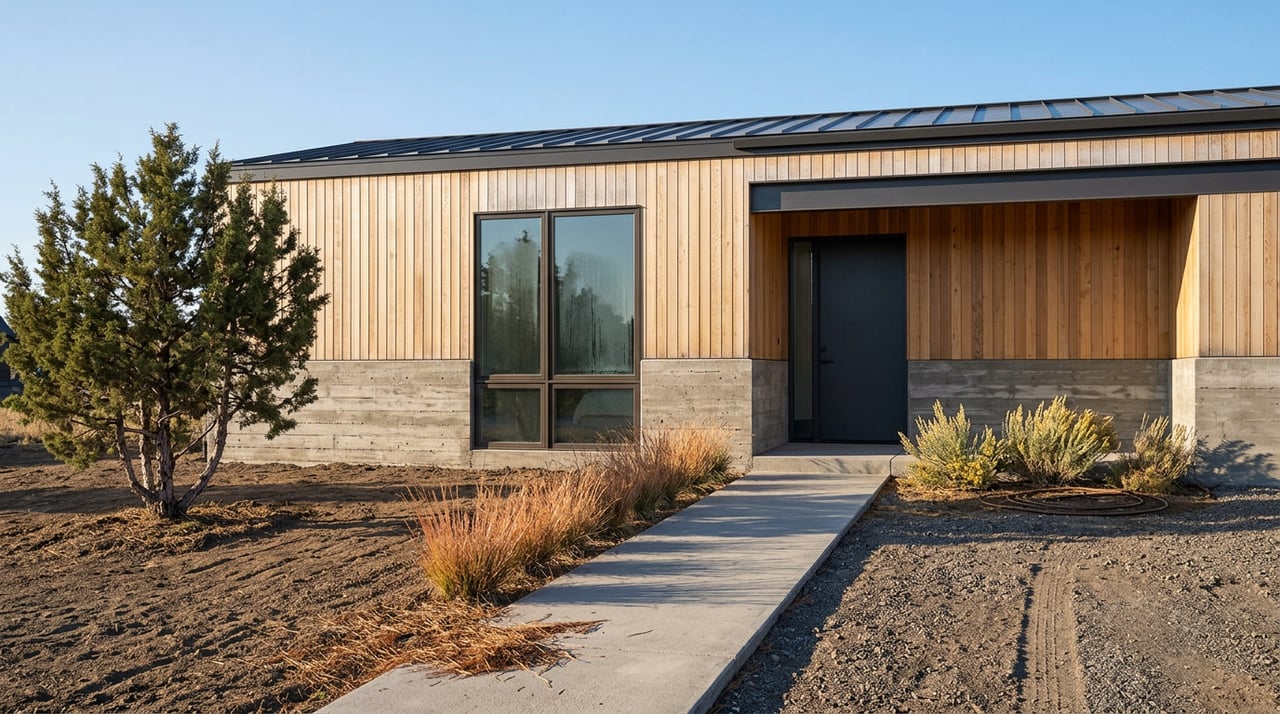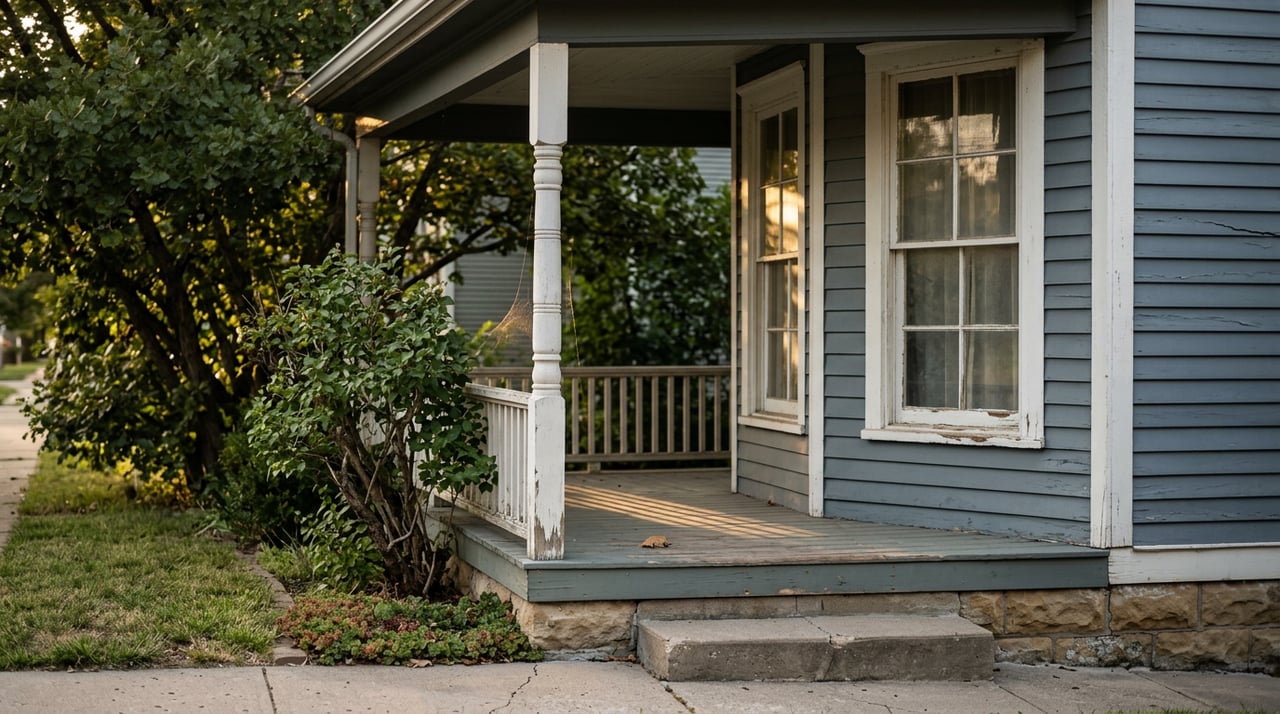
Picture two houses within sight of each other in downtown Salida. Both sit inside the boundary of Colorado's largest National Historic District. Both look the part, with clapboard siding, deep porches, and a century of paint layers. One owner wants to swap a few double-hung windows and repaint the trim. The other wants to build a second-story addition over the back half of the house.
The first project can be signed off by city staff without ever appearing on a public agenda. The second has to wait for the fourth Thursday of the month, get discussed in the City Council Chambers, and can still come back with conditions attached. Same block, same era, same "historic district" label on the property record. Different rulebook entirely.
That gap is the thing most buyers, sellers, and renovators in downtown Salida don't discover until they're already committed to a closing date or a contractor's start date.
The status your address actually has, not the one you assume
"Historic district" sounds like a single set of rules that applies uniformly to every building inside the boundary. It doesn't work that way in Salida, and the numbers show why.
When the city's Historic Preservation Commission talks about the downtown district, it's usually referencing a 2001-02 resurvey that documented 136 properties across the 32.6-acre district and sorted each one into "contributing" or "non-contributing" based on how much historic physical integrity it had retained. History Colorado's own listing for the same district describes it as 111 buildings, dating from the railroad boom between 1880 and 1930.
Those two numbers aren't a typo. A National Register nomination and a full property-by-property survey answer different questions. The survey is the one that actually governs what happens when you want to change something, and it doesn't treat every building the same. A remodeled 1960s infill building inside the boundary can carry non-contributing status, which means lighter review, while a well-preserved 1895 storefront next door carries contributing status and a much more involved process.
The practical takeaway: don't assume your house's status from its age, its address, or how it looks from the street. Ask the city's Community Development Department directly which category your specific parcel falls into before you plan a renovation budget or write a purchase offer around what you think the rules will be.
Minor activity, major activity, and why the difference is the whole ballgame
Once you know a structure's status, the next question is what kind of "activity" your project counts as under the city's preservation ordinance. This is where Salida's process splits into two distinct tracks.
| Minor Activity | Major Activity | |
|---|---|---|
| Examples | In-kind roofing or siding replacement, fence or awning changes, reopening a filled window or door opening | Additions, reconstruction, substantial remodeling, relocation, demolition |
| Application fee | $50 | $100 |
| Who decides | City staff (the Administrator or a designee) | Full Historic Preservation Commission, at a public meeting |
| Public hearing required | No | Yes |
A minor activity can be reviewed and cleared administratively, often without the owner ever sitting in front of the commission. A major activity has to go on the agenda, get presented, and get voted on. The design guidelines the city adopted in 2011 spell out that new construction and additions must be differentiated from, but compatible with, the historic building's existing size, scale, and character. That standard is judgment-based, applied case by case, which is exactly why major projects take longer and carry more uncertainty than a straightforward reroofing job.
Why the calendar matters as much as the code
Here's the part that catches people off guard even after they understand the two-track system. The Historic Preservation Commission doesn't review major projects on a rolling basis. It meets as needed on the fourth Thursday of the month, at 4 p.m., in the City Council Chambers at 448 E. First Street. Miss the packet deadline for that month's meeting and your project waits another four weeks, regardless of what your contractor's schedule or your closing timeline looks like.
Approval isn't permanent, either. Once the commission grants a Certificate of Approval for a major activity, it automatically expires one year from the date it's issued unless the work has been substantially acted upon or the city grants an extension. A financing delay, a contractor scheduling gap, or a slow permit process can push a project past that window, which means going back to the commission to ask for more time rather than moving straight to final inspection.
The commission's seats also turn over on staggered terms, so the group interpreting these guidelines shifts gradually rather than all at once. In March 2026, City Council took up a resolution reappointing longtime commissioner Ryan Short to another three-year term, following a similar round of reappointments for commissioners Keith Krebs and Patrick Regan the previous year. The same small group of appointed residents has been applying these standards for a while, which is worth knowing if you want a sense of how consistently a given type of project tends to be received.
The process itself isn't frozen from 1984, either. In 2019, City Council adopted Ordinance 2019-10, adjusting how much authority city staff has to approve changes without a full commission hearing. Not everyone welcomed the shift. Salida business owner Ray Kitson told the council at the public hearing:
"I find giving them more power and teeth to be ridiculous."
Council moved forward with the change anyway, arguing it would streamline the approval process. The disagreement is a useful reminder that the line between "minor" and "major," and between staff and commission authority, has been debated locally and can be revisited again. It isn't a fixed formula handed down from Washington.
The credit that can offset the extra hoops
None of this process exists in a vacuum, and there's a financial upside that owners of contributing properties sometimes overlook. Colorado's state historic preservation income tax credit lets owners of qualifying historic structures claim a credit worth 20 percent of qualified rehabilitation costs, on projects up to $250,000, taken as roughly $10,000 a year over five years. That credit is only available to contributing structures, which ties directly back to the status question at the start of this piece. Knowing whether your house is contributing isn't just about what review you'll face. It's about whether this credit is even on the table for you.
What this means if you're choosing between two houses
If you're comparing properties inside the district, the contributing-versus-non-contributing distinction becomes a real strategic choice, not just paperwork. A non-contributing structure inside the boundary gives you more freedom to modernize without a commission hearing, while still trading on a downtown Salida address. A contributing structure comes with more review, a slower calendar, and a one-year clock on approvals, but it also comes with tax credit eligibility and, for many buyers, the exact original character that drew them to a historic downtown in the first place.
Before you write an offer or pull a permit on anything inside the district, it's worth confirming three things directly with the city: whether your specific structure is contributing or non-contributing, whether your planned work counts as minor or major, and whether the commission's monthly meeting cycle lines up with your timeline. Those three answers will tell you more about what you're actually buying into than the words "historic district" ever will on their own.
FAQ
Does this process apply to any old house in Salida, or just the downtown district? The Certificate of Approval process applies within the boundaries of the Salida Downtown Historic District Overlay, the Historic Protection Overlay, and to individually landmarked properties elsewhere in the city. An older home outside those specific boundaries follows the standard zoning and building permit process instead.
Who has the final say on a major project? The Historic Preservation Commission, made up of appointed residents serving staggered terms, decides major Certificate of Approval applications at its monthly meeting. City Council hears appeals of the commission's decisions.
How long is an approved Certificate of Approval good for? It expires automatically one year from the date it's issued unless the work has been substantially acted upon or the city grants an extension.
If you're weighing a purchase, a sale, or a renovation inside Salida's historic downtown and want a clearer read on what a specific address actually obligates you to, First Colorado Land Office has spent decades working inside these blocks. Get in touch today and we'll help you sort out what the address on the listing sheet really means before you commit to it.