Wondering if a few acres near Nathrop will give you the freedom you want? In rural Chaffee County, the answer often depends less on the number of acres and more on what the parcel can actually support. If you are thinking about buying land for a future home, a small ranch setup, or simply more space, this guide will help you weigh the practical details before you close. Let’s dive in.
Focus on parcel fit first
Not all acreage near Nathrop works the same way. Chaffee County’s land use code governs zoning, subdivisions, roads, development standards, and private-property use in unincorporated county areas. The current code and zoning plan were adopted in November 2024 and took effect on January 1, 2025.
That means your first question should not be, “How many acres is it?” It should be, “What can I legally and realistically do with this parcel?” A five-acre parcel with workable access, suitable building areas, and clear utility options may be more useful than a larger tract with major constraints.
The county’s GIS system is a valuable starting point because it can show parcel-level layers like zoning, floodplains, steep slopes, wildfire risk, and wildlife habitat. Those details can affect where you place a home, driveway, barn, or septic area. A pretty view does not always equal an easy build.
Check access before you fall in love
Access is one of the biggest cost drivers with rural land. Chaffee County Road & Bridge maintains about 300 miles of county roads, but not every road is maintained the same way. Some roads receive limited maintenance or are maintained only in summer.
If you plan to live on the property year-round, winter access matters. You will want to confirm not just whether a road reaches the parcel, but how that road is maintained and what conditions can look like during snow season. This can shape both convenience and long-term ownership costs.
The county building guide also notes that driveway or access permits are required for single-family dwellings in unincorporated Chaffee County. If work affects county right-of-way, a road-cut permit may also be required. In other words, legal access is more than seeing a path on the ground.
Utilities can change the budget fast
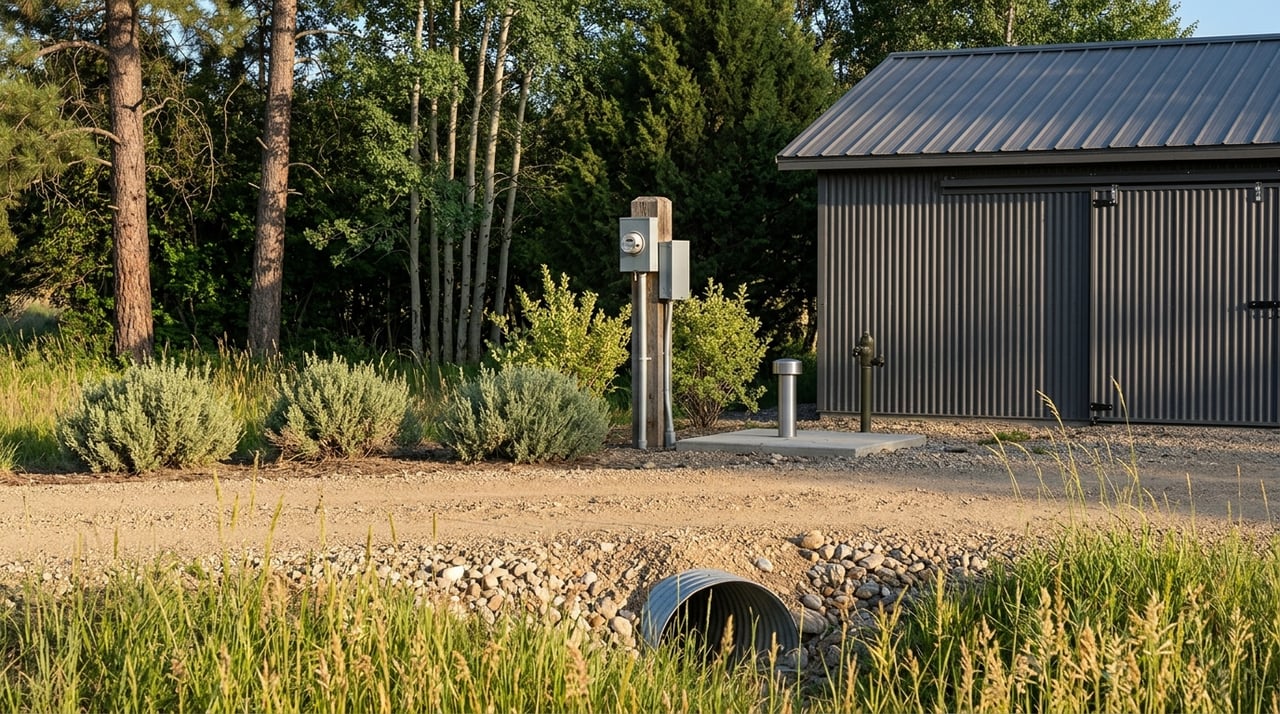
With acreage, nearby utilities do not always tell the full story. The real question is whether the parcel can be legally and economically served with water, wastewater, and access. This is where rural land purchases often become much more detailed than a typical home purchase.
Before a building permit is issued in unincorporated Chaffee County, zoning signoff is required. The county building guide also says you need either a well permit or proof of municipal or central water service, plus OWTS or proof of municipal or central sewer service.
For wells, the Colorado Division of Water Resources provides permit forms and permit-search tools. It also notes that review of a complete well-permit application may take up to 49 days. That timeline is worth considering if you are hoping to build on a specific schedule.
Soils, slope, and drainage matter
Acreage can look simple at first glance, but the ground conditions can tell a different story. The USDA Natural Resources Conservation Service says soil surveys can help identify limitations related to flooding, water tables, shallow bedrock, septic systems, pipelines, and home sites.
That makes soils a key due-diligence step for view lots, hobby farms, and small ranch properties. Soil conditions can affect where you build, what type of septic system may work, and how much site preparation could cost. This is especially important if the parcel has varied terrain.
Topography also matters beyond the view. Chaffee County’s land-use code includes site-drainage and erosion and sedimentation standards, so slope and runoff can directly affect permit complexity and development cost.
Review floodplain and hazard layers early
Some parcel constraints are hard to spot during a showing. Chaffee County’s GIS layers can flag floodplains, steep slopes, wildfire risk, and wildlife habitat. Looking at those layers early can save you time and help you avoid surprises later.
The county building guide says the county floodplain resolution uses FEMA maps. It also notes that building in a floodplain may require stamped foundation plans and an elevation certificate.
For buyers, the takeaway is simple: if a parcel has any floodplain or hazard flags, review them before you assume the homesite location or construction plan will be straightforward. A parcel may still work well for your goals, but it is better to know the extra steps up front.
Water rights and wells need separate attention
Water in Colorado has its own rules, and acreage buyers should not treat it as a minor detail. The Colorado Division of Water Resources says water-right applications fall under the jurisdiction of the water courts. It also warns that in many parts of Colorado, wells for lawn and garden uses, domestic animals, subdivisions, or similar projects may require an augmentation plan before a well permit can be obtained.
That point matters if you are picturing more than basic household use. If your plans include animals, irrigation, or broader land use, ask early how those goals line up with local water and permitting realities. It is much easier to evaluate this before closing than after you own the property.
Chaffee County also regulates areas of state interest under its 1041 rules, including the site selection of new domestic water and sewage treatment systems and the extension of existing domestic water and sewage treatment systems. In practical terms, water planning is part of land buying, not something to save for later.
Septic is not a side issue
If the parcel is not served by municipal or central sewer, onsite wastewater treatment will likely be part of the equation. The Colorado Department of Public Health and Environment says counties handle permitting for OWTS systems with flows of 2,000 gallons per day or less. Chaffee County’s planning forms include a Chaffee County OWTS Review application.
That means septic is a local review issue you will want to understand before you commit. Soil conditions, layout, and site constraints can all influence whether a system is feasible and where it can go. On acreage, septic planning often affects the placement of the home, driveway, and outbuildings.
Surveys, easements, and covenants still matter
Large land parcels can create a false sense of simplicity. You may see open space and assume the boundaries, access routes, or use rights are obvious. In reality, recorded easements, restrictions, or subdivision covenants may affect how you can use the property.
Chaffee County’s Clerk and Recorder maintains recorded property records, and the Assessor provides record-search tools. A current survey and title commitment are practical tools for verifying boundaries, easements, and recorded restrictions before closing.
This step is especially important when a parcel has shared access, irregular boundaries, or a long private drive. It is much better to sort out those details during due diligence than after ownership changes hands.
A simple Nathrop acreage checklist
If you are comparing land near Nathrop, keep this short list in front of you:
- Confirm current zoning and allowed uses
- Review county GIS layers for floodplain, slope, wildfire risk, and habitat
- Verify legal and practical road access
- Ask how road maintenance works in winter
- Check driveway permit needs
- Confirm water source options and well-permit path
- Review OWTS or sewer service requirements
- Look at soils, drainage, and topography
- Request survey and title review for easements and restrictions
- Match the parcel to your actual plans, not just your wish list
Why local guidance helps with acreage
Buying land near Nathrop is rarely a plug-and-play process. You are often weighing county land-use rules, road access, well permitting, septic review, and physical site conditions all at once. Each parcel has its own mix of strengths and tradeoffs.
That is why local experience matters. A brokerage with deep Chaffee County roots can help you ask better questions, spot issues earlier, and stay focused on whether the parcel truly fits your goals.
If you are thinking about buying acreage near Nathrop, First Colorado Land Office can help you evaluate land with the practical, local perspective that rural property decisions require.
FAQs
What should you check before buying acreage near Nathrop?
- Review zoning, county GIS layers, access, road maintenance, water options, OWTS requirements, soils, drainage, and recorded easements or restrictions.
How do road conditions affect acreage near Nathrop?
- Chaffee County says some roads are maintained on a limited basis or only in summer, so year-round access and winter maintenance should be confirmed before closing.
Do you need a permit for a driveway in unincorporated Chaffee County?
- Yes. The county building guide says driveway or access permits are required for single-family dwellings in unincorporated Chaffee County.
Why do wells and water rights matter for Nathrop acreage?
- The Colorado Division of Water Resources says well permitting can involve separate review, and some uses may require an augmentation plan before a well permit can be obtained.
What can make a parcel harder to build on near Nathrop?
- Floodplains, steep slopes, soil limitations, drainage issues, wildfire risk, and wastewater constraints can all affect buildability, cost, and permit complexity.
Why should you get a survey and title review on rural land in Chaffee County?
- A current survey and title commitment can help verify boundaries, easements, and recorded restrictions that may not be obvious during a site visit.